ADAPT, the Africa One Health Network for Disease Prevention, is a multi-country network that strengthens locally led capacity to manage antimicrobial resistance (AMR) and neglected tropical diseases (NTDs) across sub-Saharan Africa, applying a One Health approach that connects human, animal and environmental health expertise. ADAPT brings together institutions in seven African countries — Uganda, Senegal, Ghana, Nigeria, DR Congo, Ethiopia and Sudan — alongside German partners, and is led by Makerere University.
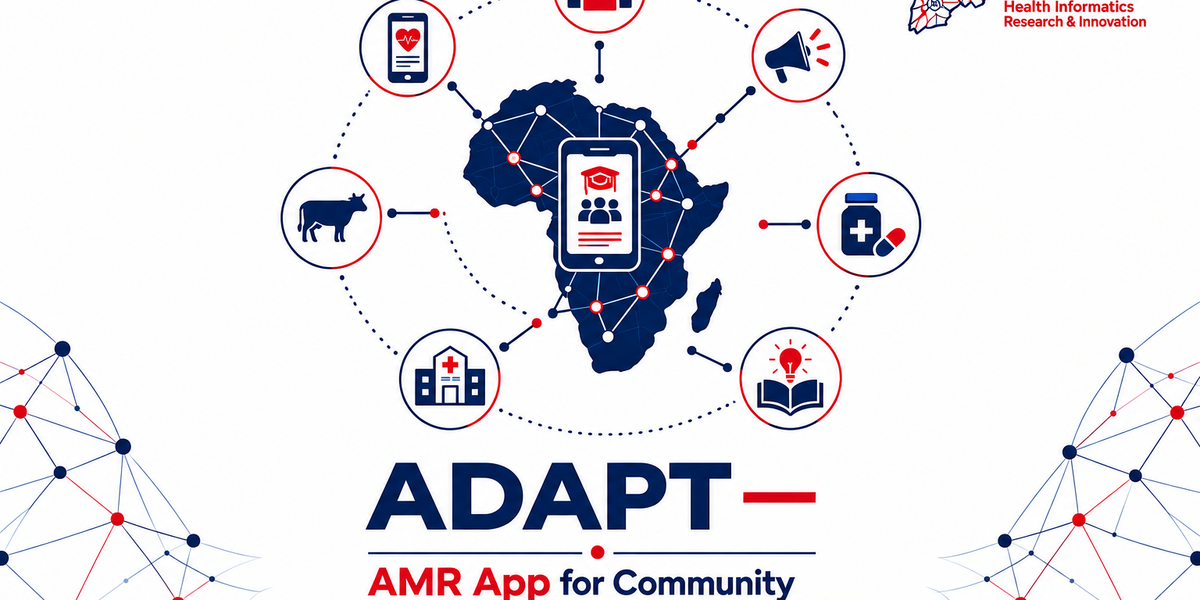
Sub-Saharan Africa carries a high AMR burden, and ADAPT and its partners identified critical gaps in how antimicrobials are used in communities. The network screens for AMR in humans, livestock and poultry, studies co-infection, develops point-of-need diagnostics, and trains institutions to lead the work locally. To address the community gaps it developed the AMR Mobile App, a mobile solution that addresses antimicrobial resistance through data collection, surveillance, and stakeholder communication, designed to serve multiple user groups while prioritising community education and engagement.

The challenge
AMR and neglected tropical diseases place a heavy burden on the region, and responses have often depended on external leadership and resources.
- Sub-Saharan Africa carries a high AMR burden
- Neglected tropical diseases compound the pressure
- Capacity to respond has often relied on outside support

Our approach
A One Health model that screens across humans, livestock and poultry and builds African-led capacity.
- Screen for AMR in humans, livestock and poultry
- Develop point-of-need diagnostics for AMR and NTDs
- Train institutions to lead the work locally
How the network operates
01
Surveillance & genetic mapping
Track AMR across humans, livestock and poultry.
02
Co-infection research
Investigate helminth infections alongside drug-resistant bacteria.
03
Point-of-need diagnostics
Develop field-ready tests for AMR and NTDs.
04
Capacity & engagement
Train researchers and engage stakeholders at local, regional and national levels.
ADAPT applies a One Health approach that connects human, animal and environmental health expertise across seven African countries.
— ADAPT — Africa One Health Network
Antimicrobials are used in households, farms and clinics, and that is where ADAPT and its partners found critical gaps. Communities have little reliable guidance on antimicrobial use. They have no direct way to reach a professional who can answer their questions. Little of what happens in them reaches the people who set policy.
The solution: the AMR Mobile App
The AMR Mobile App was conceived to address critical gaps identified by the ADAPT project and partners across multiple regions regarding AMR use in the communities. Based on the ADAPT project community needs, the AMR Mobile App includes the following core functionalities:
- Role-based access for different user groups
- Educational content delivery for community awareness on AMR
- Interactive Q&A section where users submit questions answered by certified professionals
- Dashboard for data visualization and trend analysis
- Surveillance reporting and alert generation
- Support for low-end devices and intermittent connectivity
Who it serves
The app serves five groups:
- Community Members — Primary beneficiaries of educational content; can submit questions to health experts
- Healthcare Workers — Access stewardship guidelines; respond to community questions
- Laboratory Staff — Access educational resources; contribute expertise to Q&A
- Researchers — Access aggregated data for analysis; monitor community engagement trends
- Policymakers — Access dashboards and reports for decision-making
Collaborators
Leipzig University (Germany); Federal Institute for Risk Assessment (Germany); National Institute for Biomedical Research (DR Congo); Centre for Innovative Drug Development & Therapeutic Trials for Africa (Ethiopia); Institut Pasteur de Dakar (Senegal); Kumasi Center for Collaborative Research / AFREhealth (Ghana); University of Ibadan (Nigeria); University of Khartoum (Sudan); Uganda Ministry of Health.